Fog lights vs headlights: what problem are you solving?
You’ve probably had the moment where your headlights are “on,” but the road still feels harder to read—either because the light is bouncing back off fog, heavy rain, or snow, or because everything outside the beam is just black. Headlights are designed to throw light farther down the road. In bad weather, that extra distance can work against you by lighting up the particles in the air and creating a bright wall in front of your eyes.
Fog lights solve a narrower problem: seeing the immediate lane edges, paint lines, curbs, and the car in front at low speeds when distance vision is already compromised. They do that with a low, wide beam meant to stay under some of the glare. They won’t “cut through” thick fog, and they’re not a substitute for slowing down—plus they can add glare for others if they’re too bright or aimed poorly.
When fog lights actually help—and when they don’t
Picture a wet, dark two-lane road where your low beams light up the rain like glitter and the centerline keeps disappearing. This is where well-aimed front fog lights can help: they brighten the first 30–60 feet and spread light sideways so you can track lane markings, the shoulder, and where the road bends. They’re also useful in light-to-moderate fog or blowing snow when you’re already driving slowly and need better “near-field” detail more than distance.
They don’t help much when you’re trying to see farther down the road at speed, because their beam is deliberately short. In clear weather they can be a net negative—extra foreground light can make your pupils contract and reduce how well you pick up hazards beyond the beam. In heavy rain or thick fog, turning them on won’t create visibility that isn’t there; you’ll still be limited by conditions and safe following distance.
Are you allowed to use them here? Laws, glare, and etiquette
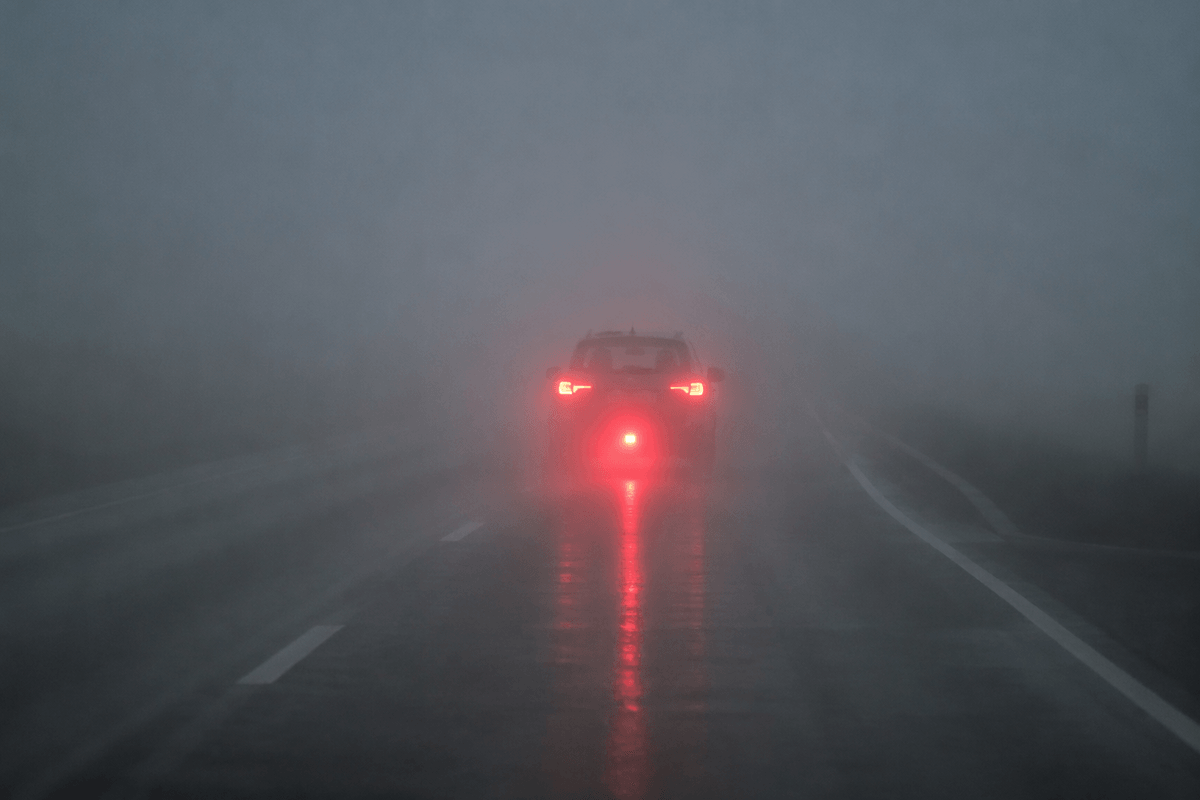
The legal part is messy because rules vary by state, but the practical baseline is consistent: fog lights are meant to supplement low beams in reduced visibility, not to add more light on clear nights. Many states effectively treat them like auxiliary lamps—allowed when properly aimed and not blinding—while some limit how many forward-facing lights can be on at once. A simple safe habit is: if you need high beams, turn fogs off; if you’re in true fog/rain/snow and using low beams, fogs may be appropriate.
Glare is where most drivers get it wrong. Fog lights that are too bright, mounted too high, or aimed like spotlights create discomfort glare and can reduce other drivers’ ability to see lane markers. Rear fog lights are even touchier: they’re designed for dense fog and can look like someone riding the brakes in normal rain, so use them only when visibility is seriously limited and switch them off as soon as traffic can clearly see you.
Front fogs, rear fogs, or neither: choosing by your driving environment
If you mostly drive in cities and suburbs with streetlights, reflective lane paint, and lower speeds, front fog lights often aren’t a “must-have.” They can still help in heavy rain at night or on poorly lit side roads, but the benefit is intermittent—so paying for an aftermarket kit may feel like a lot for something you use a few times a year. Rural commuting is where front fogs make the strongest case: dark shoulders, wildlife edges, and wet pavement are exactly the “near-field” problems they’re good at solving.
Rear fog lights are for a different environment: places where true, dense fog is common and being seen from behind is the priority. If you regularly drive through river valleys, coastal marine layers, or mountain passes where visibility can drop to a few car lengths, a rear fog can be a real safety tool. If your “fog” is usually just steady rain or light mist in traffic, skip rear fogs or be disciplined about switching them off—they’re bright enough to annoy (and distract) drivers behind you.
Factory fog lamps vs aftermarket kits: what matters most
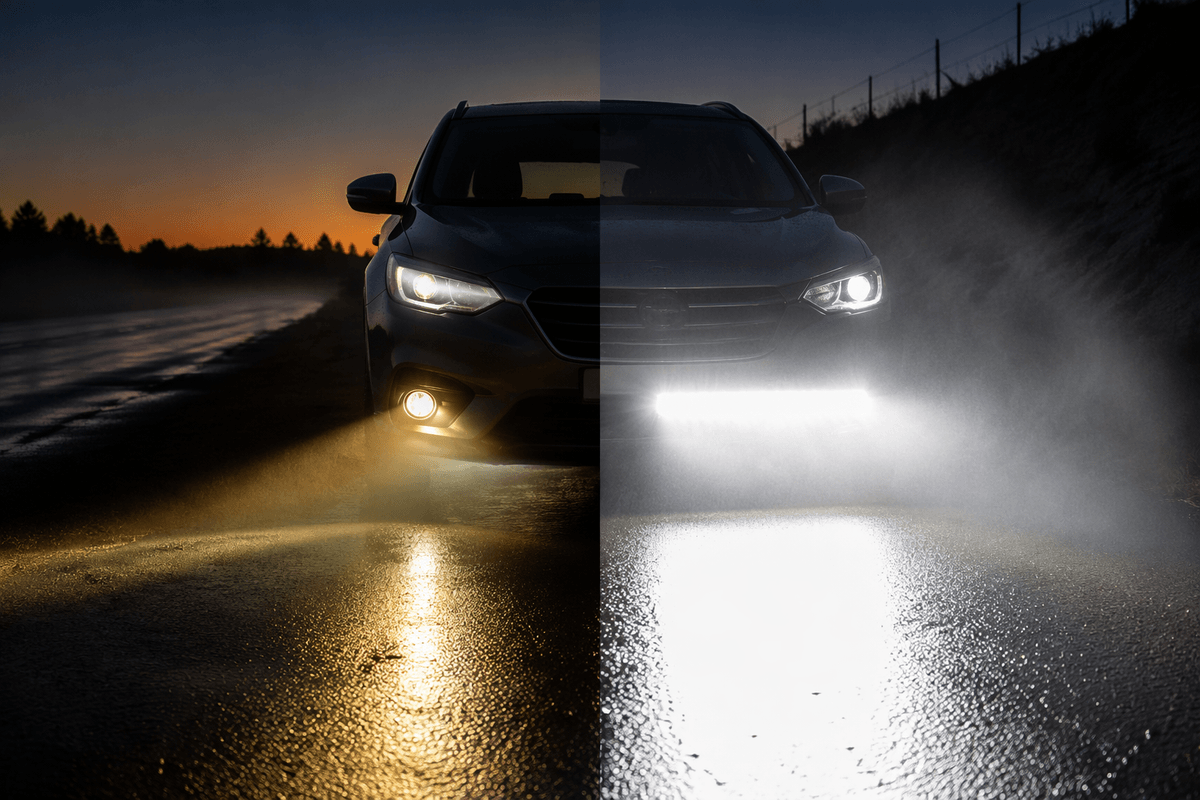
Most drivers shopping fog lights are really shopping for beam control. Factory fog lamps usually win on that front because the reflector/projector shape, mounting height, and switch logic were designed to work with the car’s low beams without throwing light upward. They’re also more likely to stay legal: proper markings, predictable output, and a clean cutoff that reduces glare to oncoming traffic. The downside is cost—factory options can be expensive if you’re adding them after purchase, and some trims only offer them bundled with features you don’t care about.
Aftermarket kits are a mixed bag. A cheap “bright LED bar in the bumper” often adds foreground glare without improving usable detail in fog or rain, especially if it sits too high or can’t be aimed. Look for a true fog pattern (wide, low, sharp cutoff), solid brackets that won’t vibrate, and a harness that integrates safely (relay, fuse, and a switch that keeps them off with high beams). Plan on spending time aiming them; installation quality matters as much as the lamp.
Bulb type and color myths: halogen, LED, HID, yellow
You’ll hear that “yellow cuts fog” or that swapping to LEDs will magically improve bad-weather vision. What matters more than bulb type is the beam pattern and cutoff. A well-designed halogen fog can outperform a cheap LED kit if the LED scatters light upward. LEDs do have advantages—fast start-up, low power draw, long life—but only when the optics were built around an LED emitter. Dropping LED bulbs into a halogen fog housing often creates glare and less usable contrast, even if it looks brighter.
HID conversions are usually the worst fit for fog lights: they’re intense, can take time to warm up, and are more likely to blow past the housing’s intended focus. Color is similar. Selective yellow can reduce perceived glare and eye strain for some drivers, but it doesn’t “penetrate” dense fog; it mainly changes contrast and comfort. If you want a practical rule: prioritize a controlled, low beam with a sharp cutoff, then pick a color and bulb you can aim and keep legal.
Setup that makes them useful: aiming, height, and when to switch
You can tell when fog lights are set up right because they “paint” the bottom of the scene—lane edges, reflectors, and the shoulder—without lighting up the fog itself. If the hotspot is up near license-plate height on the car ahead, they’re aimed too high. A practical check is on level ground facing a wall: the top edge of the fog beam should sit noticeably below the low-beam cutoff, and the left/right aim should be symmetric so one side isn’t throwing into oncoming lanes. Mounting height matters too; true fogs belong low in the bumper, not up in the grille where they act like extra low beams.
Switching discipline is the other half. Use front fogs with low beams in real reduced visibility at lower speeds; turn them off in clear weather, and especially when you need high beams. Rear fogs are “only when you’d want hazard lights for visibility”—then off as soon as traffic can clearly see your tail lamps.
So who needs fog lights—and what’s the simplest next step?
If you regularly drive unlit rural roads in heavy rain, light fog, or blowing snow, front fog lights can be worth having because they make lane edges and shoulders easier to track at low speed. If your driving is mostly well-lit city/suburban streets, they’re usually a “nice to have,” not a fix for poor headlights. Rear fogs only make sense if you see true dense fog where cars can appear at close range.
The simplest next step is free: on a dark, wet night, try low beams with and without your existing fogs and judge whether the road markings get clearer without creating extra glare in mirrors. If you’re upgrading, buy for beam control, then budget time to aim them; the install and alignment are the real cost.