Start with a clear channel promise, not a random vlog
People don’t subscribe to “my life.” They subscribe to the part of your life that reliably helps or entertains them. A clear channel promise is one sentence that tells a new viewer what they’ll get and why you’re the one delivering it: “Weekly budget-friendly city weekends,” “Running training for busy parents,” or “Realistic home cooking after work.” Keep it specific enough that someone can picture the episodes, but broad enough that you won’t run out of ideas in a month.
Test the promise with three video ideas you could film this week using what you already have. If you can’t list them fast, the promise is too vague. If it requires constant travel, expensive gear, or perfect scheduling, it’s too costly to sustain. Choose the version you can repeat on a normal week, because consistency is what makes a vlog channel feel credible.
Pick a filming style you can repeat every week
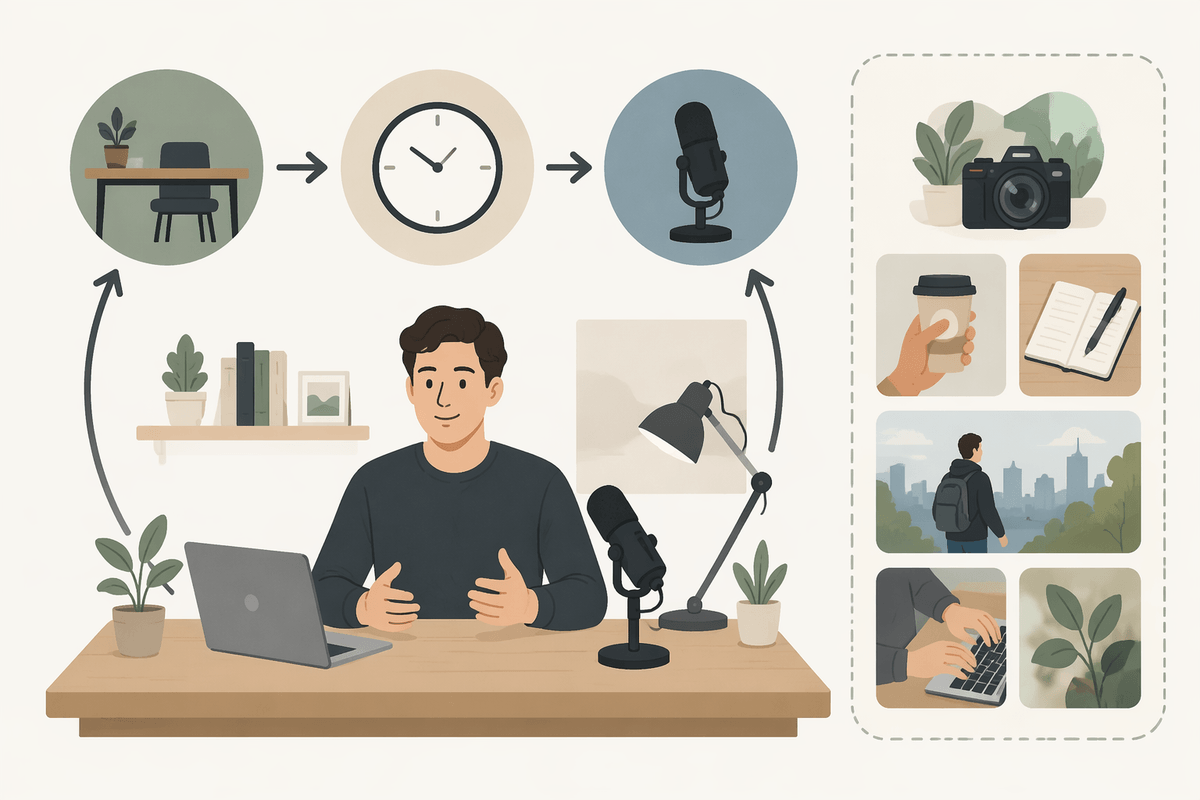
The fastest way to stay consistent is to choose a format that fits your real schedule, not your “someday” schedule. Decide what most episodes will look like: a talking-head check-in at your desk, a “day in the life” with voiceover, a walk-and-talk outside, or a simple three-scene mini-story (setup, doing the thing, takeaway). When viewers recognize the pattern, they relax and keep watching.
Design your default shoot around repeatable constraints: one location you can always use, one time window you can count on, and one way to capture usable audio. A travel-heavy, multi-location vlog sounds exciting, but it often dies when weather, errands, or noise ruins the plan. Pick a style where 80% of the footage is predictable, and leave 20% for spontaneous moments that make it feel alive.
Gear that matters: audio, light, then camera
You can get away with average video, but not bad audio. Viewers will forgive a slightly soft image; they won’t sit through echo, wind, or muffled speech. If you’re using a phone, add a simple lav mic or a small on-camera mic and record a quick 10-second test before you start. Listen for fridge hum, traffic, and clothing rustle—those are the usual killers.
Lighting is the next multiplier. Put your face near a window, turn off harsh ceiling lights, and aim for an even, bright look. If you film at night or your window light is unreliable, a basic LED panel or ring light is worth more than upgrading your camera. A newer camera won’t fix noisy audio or flat lighting, and it adds cost plus setup time. Start with what you have and improve the pieces viewers actually feel.
Plan less, shoot smarter: simple outlines and shot lists
You don’t need a script to vlog well, but you do need a point. Before you hit record, write a three-bullet outline: (1) what you’re doing today, (2) the problem or decision you’re solving, (3) what the viewer should take away. That’s enough structure to stop the “wandering” feeling that makes people click off, while still leaving room for real moments.
Then make a tiny shot list you can reuse. Get an opening “where we are” clip, two or three action clips (hands doing the thing, a quick wide shot, a close-up), and one recap to camera. If you’re filming errands or a project, grab B-roll while you’re already moving—don’t “set up a scene.” The practical constraint: planning is cheap, but re-shooting is expensive in time and energy, so aim to capture what you need once.
Look and sound confident on camera without acting
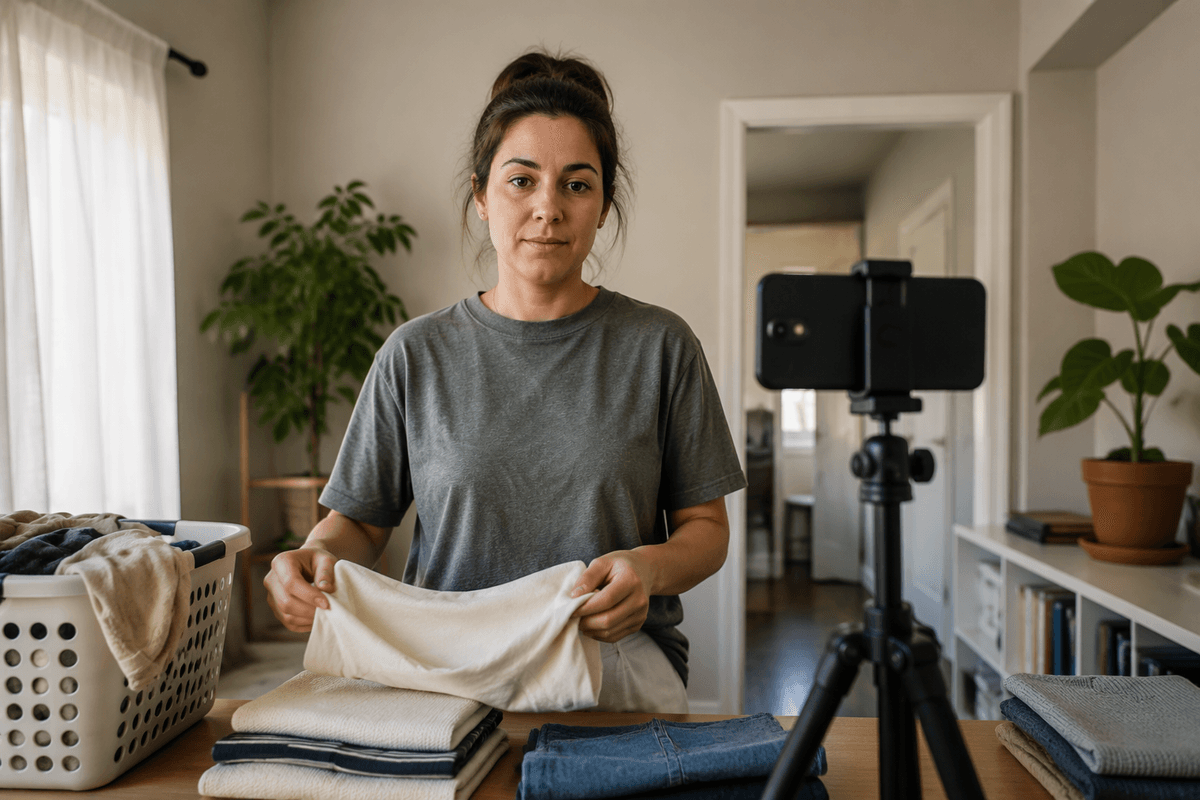
You’ve probably watched yourself back and thought, “Why do I look awkward?” Most of that isn’t your face or your voice—it’s uncertainty. Give yourself something concrete to do: hold a mug, fold laundry, walk to the car, point at the thing you’re talking about. Movement makes you look natural, and it takes pressure off “performing.”
Confidence on camera is mostly pacing and clarity. Speak one idea per sentence, then pause. Those pauses feel long while filming, but they read as calm and competent on playback—and they give you clean edit points. Keep your chin slightly forward, shoulders down, and look at the lens like it’s one person you like talking to. If you ramble, stop mid-take and restart the sentence; that’s not failure, it’s efficient. The practical cost is time: expect 10–15 minutes of warm-up before you sound like yourself.
Edit for pace: cut ruthlessly, keep the moments
You’ll feel tempted to keep everything because you worked hard to film it. Viewers don’t care how long it took; they care how fast the video pays them back. Do one pass where you only remove dead space: long breaths, repeated lines, walking-between-rooms footage, and any clip that doesn’t change the situation. If a sentence can be removed without changing the story, cut it. Tight pacing makes you look more confident than perfect delivery.
Then protect the moments that make vlogs worth watching: a quick reaction, a mistake, a small win, a real opinion, a two-second laugh. Those are the “human proof” that keeps people with you. Use jump cuts on talking parts, but let certain beats breathe for a second so it doesn’t feel frantic. The constraint is time—editing expands to fill your week—so set a hard limit (like 90 minutes) and publish the best version you can inside it.
Upload like a marketer: titles, thumbnails, and metadata
You can do everything right and still get ignored if your packaging is vague. Think of your title and thumbnail as a promise the video must keep. Write titles that are specific and outcome-driven: “I meal-prepped for 5 days in 45 minutes” beats “Sunday Reset.” Put the main keyword in plain language (“budget weekend in Chicago,” “beginner 5K training”) and keep it readable on a phone. For thumbnails, use one clear image, big contrast, and 2–4 words max if you use text at all. If it needs explaining, it won’t work.
Metadata is the support system, not the star. Use your description to restate the promise in the first two lines, add a simple chapter list, and include 3–5 relevant search phrases naturally. Tags matter less, but they’re quick to add. The practical constraint is time: don’t redesign forever—make two thumbnail options, pick one, upload, and move on.
Stay consistent and improve on purpose, not on vibes
You’ll miss weeks. The difference between a channel that grows and one that stalls is whether you return with a plan. Pick a minimum schedule you can keep on a normal week (even one solid video every other week), then protect one repeatable “production block” on your calendar for filming and one for editing. If you wait until you feel motivated, you’ll publish randomly and your skills won’t compound.
Improve with a simple feedback loop: each upload, choose one measurable thing to fix next time (audio levels, tighter first 30 seconds, clearer story, steadier framing). Track it in a note. Don’t overhaul everything at once—big resets cost time, and time is the main constraint.